When One Thermostat Can’t Please Everyone
You know the frustration of a building where the upstairs bedrooms roast while the ground floor stays chilly, or an office where the corner conference room needs cooling at the same moment the storage area needs nothing at all. Traditional single-zone systems force a compromise, running full blast for the whole structure whether or not every room needs it. That inefficiency shows up on your utility bill and in the constant fiddling with a single thermostat that can never satisfy competing demands.
Variable Refrigerant Flow technology solves that problem at its root. Instead of pumping conditioned air through one large duct network at a fixed capacity, a VRF system precisely modulates the amount of refrigerant delivered to multiple indoor units. Each zone gets exactly what it needs, when it needs it. At Thorsen’s-Norquist , we design and install these systems so that the heat coming off a sunlit south-facing room and the cool demand of a shaded interior office are handled independently and simultaneously.
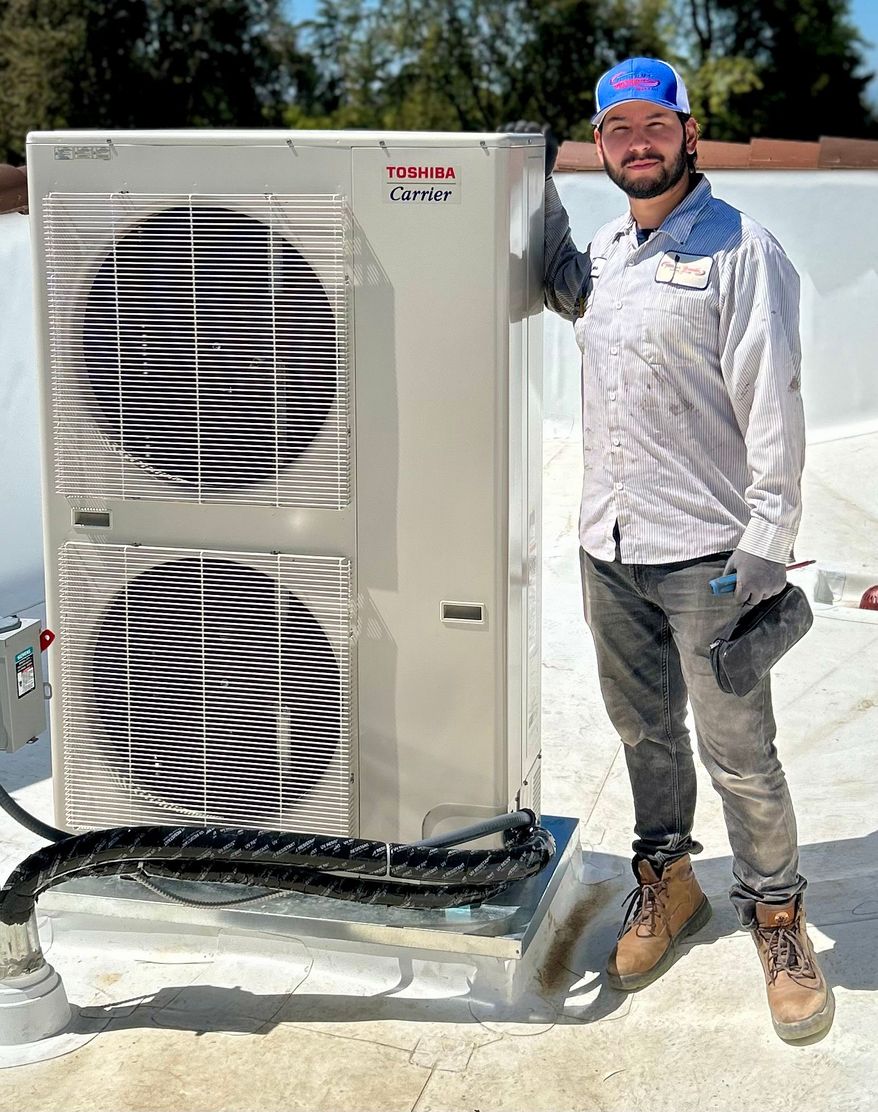
Thorsen’s-Norquist Handles your VRF System
When you hire us for your new VRF installation in Modesto and Turlock, CA, maintaining comfort in different rooms of your building will be extremely easy without having to worry about costly energy bills. Our professionals will answer all of your questions and keep you informed throughout the installation process. Once your new system is installed, we’ll make sure to test the system for effective and efficient performance. We also recommend entering into a maintenance agreement with us to keep your investment protected with an extended lifespan. Give us a call today at (209) 287-0006 to learn more about the benefits of VRF systems!
How VRF Technology Actually Works
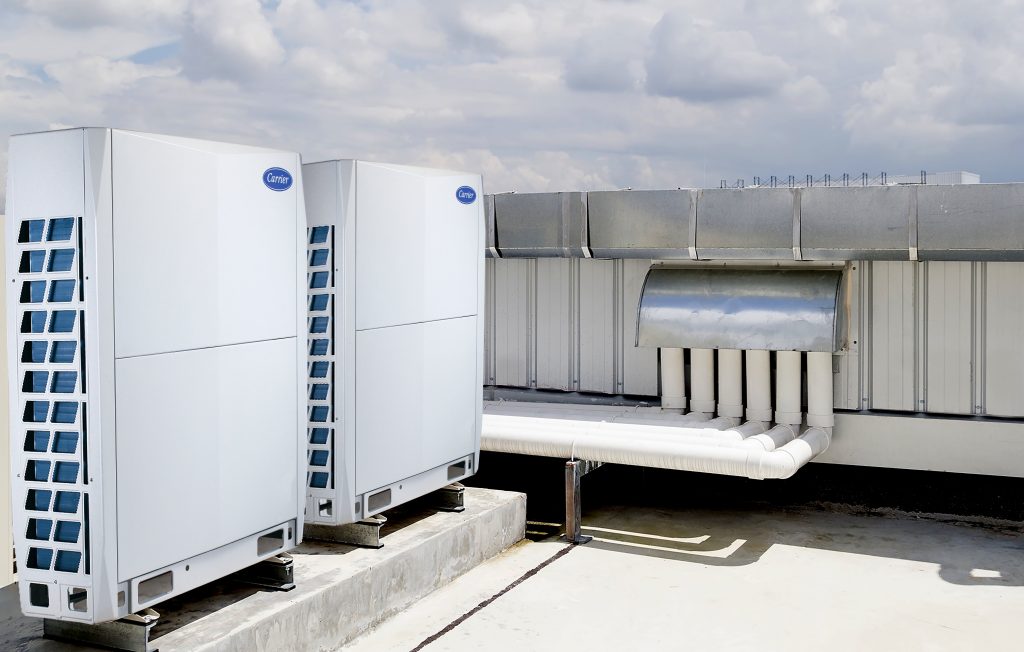
The heart of a VRF setup is an inverter-driven compressor housed in the outdoor condensing unit. Rather than cycling fully on and off like a conventional compressor, the inverter ramps capacity up or down in fine increments, often operating at partial load for long stretches. This continuous modulation eliminates the energy spikes of frequent starts and holds temperatures within a tight tolerance, frequently within a degree of the setpoint.
Refrigerant travels through a network of insulated copper lines to individual indoor evaporator units, each with its own electronic expansion valve that meters flow precisely. Heat recovery configurations take this a step further, capturing heat rejected from zones that need cooling and redirecting it to zones that call for heating. That simultaneous heating and cooling capability is what sets premium VRF systems apart, and it is especially valuable in mixed-use buildings during shoulder seasons.
Applications Where VRF Excels
We install VRF systems across a wide range of property types, and the technology adapts well to situations where conventional equipment struggles. A few scenarios where these systems consistently prove their value:
- Multi-story residences: Homes with distinct temperature zones benefit from independent control on each floor, ending the war between family members over a single thermostat.
- Historic buildings: Structures that cannot accommodate large ductwork use compact refrigerant lines that snake through existing cavities with minimal demolition.
- Offices and professional suites: Tenants in different suites set their own comfort levels while the property owner benefits from a single, efficient central system.
- Restaurants and retail: High-heat kitchen areas and cooler dining rooms operate in the same building without one dragging down the other.
- Additions and renovations: New square footage can be tied into an existing VRF network without oversizing or replacing the whole system.
The Design and Installation Process We Follow
Getting a VRF system to perform as promised depends heavily on the engineering that happens before any equipment arrives. We begin with a detailed load calculation for every zone, accounting for window orientation, insulation values, occupancy patterns, and internal heat gains from lighting and equipment. Oversizing a VRF system undermines its efficiency advantage, so we size the condensing unit and the indoor units to match measured loads rather than rough estimates.
Refrigerant piping layout is equally critical. Line lengths, vertical separation between units, and the placement of branch selectors all affect capacity and reliability. We route lines to stay within manufacturer tolerances, pressure-test the entire circuit, and pull a deep vacuum to ensure no moisture or contaminants remain before charging. Commissioning includes verifying that each zone responds correctly to its controller and that the system balances loads as designed.
Working With Thorsen’s-Norquist
We take our responsibility very seriously when you place your trust in us. A VRF installation is a significant investment, and we treat it that way from the first site visit through final commissioning. We pledge to always tell you up front what your cost will be to complete your job correctly, so there are no surprises once the work is underway.
We also make it a point to go over any details or limitations of the proposed system that will affect your enjoyment of the end result, whether that involves indoor unit placement, control options, or maintenance access. Homeowners and businesses throughout Modesto, Turlock, CA, and surrounding areas rely on us for systems that deliver quiet, precise, zone-by-zone comfort. If you are weighing whether Variable Refrigerant Flow is the right fit for your property, reach out to Thorsen’s-Norquist and we will walk you through exactly what the technology can and cannot do for your specific building.